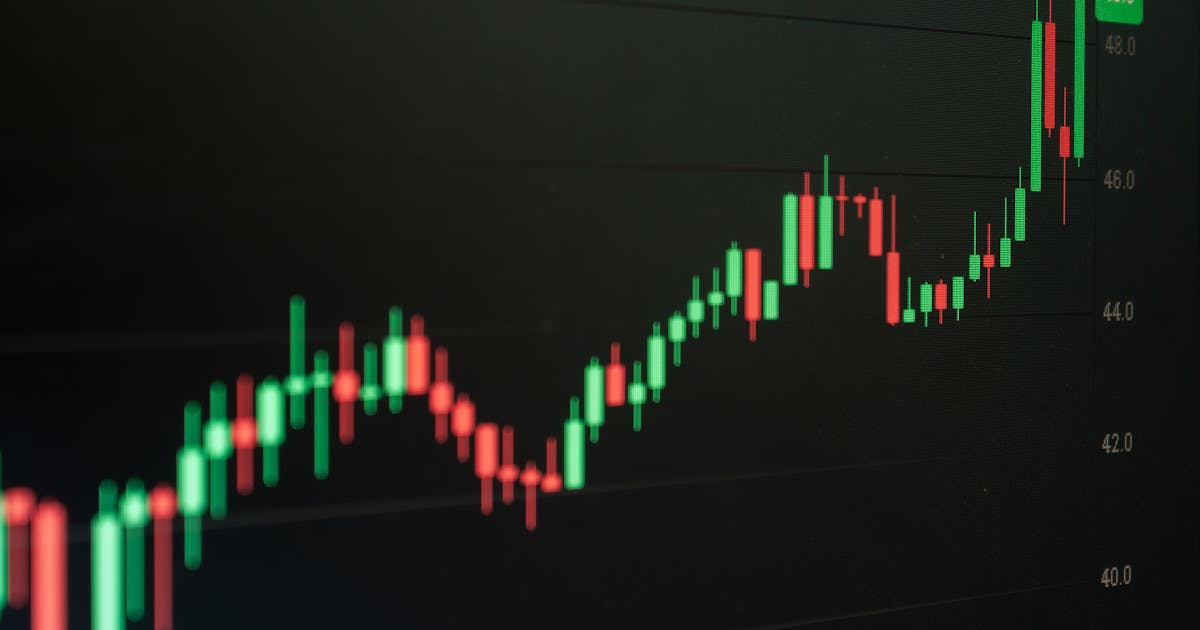
Candlestick patterns are visual formations on price charts that reveal the battle between buyers and sellers, helping traders anticipate potential reversals and continuations. Developed centuries ago and still widely used today, candlesticks pack a remarkable amount of information into a simple shape. Learning to read them is one of the most practical skills a trader can develop. この地域に初めて来た方は、 The Psychology of Trading: Mastering Fear and Greed これはこの記事の有用な補足資料となる。.
This guide explains how candlesticks work and walks through the essential patterns every trader should recognize, with clear descriptions of what each one signals and how to interpret it sensibly.
How to Read a Candlestick
Each candlestick represents price action over a specific period, such as a minute, an hour, or a day. A single candle conveys four key prices: the open, the close, the high, and the low for that period.
- The body: the thick part, showing the range between the open and close.
- The wicks (or shadows): the thin lines above and below, showing the high and low.
- Color: a candle is typically one color when the close is above the open (bullish) and another when the close is below the open (bearish).
This simple structure tells a story. A long body signals strong conviction, while long wicks reveal rejection of certain price levels. Reading these clues is the foundation of candlestick analysis.
Why Candlestick Patterns Matter
Candlestick patterns matter because they reflect the psychology of market participants in real time. Each candle captures the ongoing struggle between buyers and sellers, and recognizable patterns often signal shifts in that balance. A pattern can hint that a trend is losing steam or that momentum is building.
However, candlesticks are not magic. They work best as part of a broader analysis, confirming or adding weight to other signals rather than standing alone. Used thoughtfully, they help traders time entries and exits with greater precision and read the market’s mood more accurately.
Single-Candle Patterns
Some of the most useful patterns consist of just one candle, making them easy to spot and interpret.
The Doji
A doji forms when the open and close are nearly equal, creating a tiny body with wicks on either side. It signals indecision, a standoff between buyers and sellers. After a strong trend, a doji can warn that momentum is fading and a reversal may be near.
The Hammer
A hammer has a small body near the top and a long lower wick, appearing after a downtrend. It suggests that sellers pushed prices down but buyers fought back strongly, potentially signaling a bullish reversal.
More Essential Single-Candle Patterns
The Shooting Star
The shooting star is the mirror image of the hammer, appearing after an uptrend. It has a small body near the bottom and a long upper wick, showing that buyers pushed prices up but sellers overwhelmed them, driving the close back down. This often signals a potential bearish reversal as upward momentum stalls.
The Inverted Hammer
Resembling the shooting star but appearing after a downtrend, the inverted hammer has a long upper wick and a small body near the bottom. It suggests buyers attempted to push prices higher, hinting that the downtrend may be weakening and a reversal could be forming.
The Hanging Man
The hanging man looks like a hammer but forms after an uptrend. Its long lower wick shows that sellers managed to push prices down significantly during the period, warning that the uptrend may be losing its grip even though buyers recovered by the close.
Marubozu
A marubozu is a candle with a long body and little or no wick, indicating strong, one-sided conviction. A bullish marubozu shows buyers in complete control, while a bearish one shows sellers dominating. These candles often signal powerful momentum in the direction of the body.
Two-Candle Patterns
Patterns formed by two candles add context by showing how one period’s action relates to the next.
The Bullish Engulfing Pattern
This pattern occurs when a small bearish candle is followed by a larger bullish candle that completely engulfs the previous one. Appearing after a downtrend, it signals that buyers have seized control from sellers, often marking a potential bullish reversal. The larger the engulfing candle, the stronger the signal.
The Bearish Engulfing Pattern
The opposite of its bullish counterpart, this pattern features a small bullish candle followed by a larger bearish candle that engulfs it. Forming after an uptrend, it suggests sellers have overtaken buyers, potentially signaling a bearish reversal and a shift in momentum.
The Piercing Line and Dark Cloud Cover
The piercing line is a bullish reversal pattern where a bearish candle is followed by a bullish candle that closes well into the previous candle’s body. The dark cloud cover is its bearish equivalent, with a bullish candle followed by a bearish one that closes deep into the prior body. Both signal a meaningful shift in the balance of power.
Three-Candle Patterns
Three-candle patterns offer even richer context and are often among the more reliable formations.
The Morning Star
The morning star is a bullish reversal pattern that unfolds over three candles: a large bearish candle, a small-bodied candle showing indecision, and a strong bullish candle. Appearing after a downtrend, it paints a picture of selling pressure giving way to renewed buying, often signaling a bottom.
The Evening Star
The evening star is the bearish counterpart, forming after an uptrend with a large bullish candle, a small indecisive candle, and then a strong bearish candle. It suggests that buying momentum has exhausted itself and sellers are taking control, potentially marking a top.
The Three White Soldiers and Three Black Crows
These striking three-candle patterns signal strong momentum. The three white soldiers consist of three consecutive long bullish candles, each closing higher than the last, indicating powerful and sustained buying pressure. Appearing after a downtrend, this pattern often signals a strong bullish reversal.
The three black crows are the bearish mirror, featuring three consecutive long bearish candles, each closing lower. After an uptrend, this pattern suggests determined selling and a potential strong bearish reversal. Both patterns are valued for the conviction they display, showing a decisive shift rather than mere hesitation.
Continuation Patterns
Not all candlestick patterns signal reversals; some indicate that the existing trend is likely to continue after a brief pause.
Rising and Falling Three Methods
The rising three methods is a bullish continuation pattern where a strong bullish candle is followed by a few small candles that pull back slightly, then another strong bullish candle that resumes the uptrend. It shows that a brief consolidation has not derailed the underlying momentum. The falling three methods is its bearish equivalent, indicating a downtrend is set to continue after a small pause.
Spinning Tops
Spinning tops have small bodies with wicks on both sides, reflecting indecision. While a single spinning top is not strongly directional, a cluster of them often indicates a period of consolidation or balance between buyers and sellers, which can precede a continuation or a reversal depending on the context.
The Importance of Context
Perhaps the most crucial lesson in candlestick analysis is that patterns must be read in context. The same pattern can mean very different things depending on where it appears. A hammer at the bottom of a downtrend near a support level carries far more weight than the identical candle in the middle of a directionless range.
Context includes the prevailing trend, key support and resistance levels, trading volume, and the broader market environment. A pattern that aligns with these factors is far more reliable than one that appears in isolation. This is why experienced traders never trade a candlestick pattern blindly; they always ask whether the surrounding context supports the signal.
Confirmation Is Key
A single candlestick pattern is a hint, not a guarantee. Wise traders wait for confirmation before acting. Confirmation might come from the next candle moving in the expected direction, a break of a key level, or agreement from other indicators. This patience filters out many false signals.
For example, after spotting a bullish engulfing pattern, a trader might wait for the following candle to close higher before entering, confirming that buyers are indeed in control. While waiting for confirmation occasionally means entering a bit later, it significantly improves the odds of trading genuine moves rather than fleeting noise. Confirmation is one of the simplest ways to make candlestick trading more reliable.
Combining Candlesticks With Support and Resistance
Candlestick patterns become far more powerful when combined with support and resistance levels. These are price zones where the market has historically reversed, and when a candlestick reversal pattern forms at such a level, the signal gains considerable strength.
Imagine a bullish reversal pattern like a hammer forming precisely at a well-established support level. This convergence of signals, the pattern and the level both pointing the same way, creates a far more compelling trade setup than either alone. Similarly, a bearish pattern at strong resistance carries extra weight. Learning to spot these confluences is a key skill that elevates candlestick analysis from guesswork to genuine edge.
Candlesticks and Volume
Volume, the number of shares or contracts traded, adds another layer of confirmation to candlestick patterns. A reversal pattern accompanied by high volume suggests strong participation and conviction behind the move, making it more trustworthy. The same pattern on low volume may lack the force to follow through.
For instance, a bullish engulfing pattern on heavy volume indicates that buyers are entering with real commitment, lending credibility to the reversal signal. Paying attention to volume alongside candlesticks helps separate meaningful patterns from those likely to fizzle. This combination reflects a more complete reading of the market’s underlying dynamics.
Common Mistakes With Candlestick Patterns
Traders new to candlesticks often make predictable errors that undermine their results:
- Trading patterns in isolation, ignoring trend, context, and confirmation.
- Overtrading, seeing patterns everywhere and acting on weak or ambiguous signals.
- Ignoring the bigger picture, focusing on a single candle while missing the overall trend.
- Skipping risk management, treating a pattern as certainty rather than probability.
- Using tiny timeframes, where noise produces many unreliable patterns.
Avoiding these mistakes is largely about discipline and perspective. Candlesticks are a tool to inform decisions, not a crystal ball. Treating them with appropriate respect for their limitations leads to far better outcomes than relying on them blindly.
Building a Candlestick Trading Approach
To use candlesticks effectively, integrate them into a structured approach rather than trading every pattern you see. Start by identifying the overall trend and key levels. Then look for high-quality patterns that form at meaningful locations and align with the broader context. Wait for confirmation, and always define your risk before entering.
This methodical process turns candlestick recognition into a practical edge. Rather than reacting impulsively to every shape on the chart, you selectively act on the strongest setups where multiple factors align. Over time, this disciplined application of candlestick analysis, combined with sound リスク管理, can meaningfully improve your timing and decision-making in the markets.
Practicing Pattern Recognition
Like any skill, reading candlesticks improves with practice. Spending time studying charts, identifying patterns, and observing what happens afterward builds your intuition. Many traders review historical charts to train their eye, noting how patterns played out in different contexts and learning to distinguish reliable signals from misleading ones.
This deliberate practice accelerates your development. Over hundreds of observations, you begin to recognize patterns quickly and sense which are likely to be meaningful. Keeping a journal of the patterns you trade and their outcomes further sharpens your judgment, revealing which setups work best for you. With time and repetition, candlestick reading becomes second nature, an intuitive part of how you interpret price action.
The Psychology Behind the Patterns
Understanding why candlestick patterns form deepens your ability to read them. Each pattern is a snapshot of human emotion, fear, greed, hope, and capitulation, expressed through buying and selling. A long lower wick, for example, reflects sellers driving prices down only to be overwhelmed by buyers who saw value, a real-time tug of war captured in a single candle.
When you grasp the psychology, patterns become more than shapes to memorize; they become stories about who is winning the battle between bulls and bears. A bullish engulfing pattern tells the story of buyers decisively taking control after a period of selling. This narrative understanding helps you interpret patterns intelligently rather than mechanically, adapting to nuances that rigid rules might miss.
Limitations to Keep in Mind
For all their usefulness, candlestick patterns have genuine limitations that responsible traders acknowledge. They are probabilistic, not predictive; a bullish pattern can still be followed by a decline. They can produce false signals, especially on shorter timeframes or in choppy, directionless markets. And they say nothing about fundamentals or external events that can override technical signals.
Recognizing these limitations is not a reason to dismiss candlesticks but to use them wisely. They are one input among many, most powerful when combined with trend analysis, support and resistance, volume, and sound risk management. No trader should stake everything on a single pattern, and those who treat candlesticks as a complete system rather than a helpful tool often learn this lesson the hard way.
Integrating Candlesticks Into a Complete Strategy
The most successful traders weave candlestick analysis into a comprehensive approach rather than relying on it exclusively. They combine patterns with an understanding of the broader trend, key technical levels, and overall market conditions, while always managing risk carefully. In this integrated framework, candlesticks excel at refining entry and exit timing.
This holistic approach plays to the strengths of candlesticks while compensating for their weaknesses. A pattern that aligns with the trend, forms at a key level, is confirmed by volume, and fits the broader picture represents a high-probability setup. By demanding this kind of confluence, traders use candlesticks to sharpen their edge rather than as a standalone crutch. The result is a more disciplined, reliable, and confident approach to the markets.
Final Thoughts
Candlestick patterns are a timeless and versatile tool that every trader benefits from understanding. By learning to read individual candles and recognize the essential patterns, you gain insight into the ever-shifting balance between buyers and sellers, and into the emotions driving the market. This knowledge can meaningfully improve your timing and decision-making.
Yet the true value of candlesticks emerges only when they are used with context, confirmation, and discipline. Treat them as a powerful lens rather than a magic formula, integrate them with other analysis and solid risk management, and practice diligently to sharpen your eye. Do this, and candlestick patterns will become a reliable and rewarding part of your trading repertoire for years to come.
A Quick Reference to the Essential Patterns
As you build familiarity, it helps to keep the core patterns organized by what they signal. Bullish reversal patterns to watch include the hammer, inverted hammer, bullish engulfing, piercing line, morning star, and three white soldiers. Bearish reversal patterns include the shooting star, hanging man, bearish engulfing, dark cloud cover, evening star, and three black crows. Indecision is captured by the doji and spinning tops, while continuation is shown by the rising and falling three methods.
Rather than memorizing this list mechanically, focus on understanding the logic behind each group. Reversal patterns mark a shift in control between buyers and sellers, indecision patterns reflect a temporary balance, and continuation patterns show a trend pausing before resuming. Grasping these underlying themes makes the individual patterns far easier to recall and apply naturally as you read live charts.
Candlesticks Across Different Markets
One of the great strengths of candlestick analysis is its universality. Because every liquid market produces open, high, low, and close prices, the same patterns appear whether you trade stocks, currencies, cryptocurrencies, or commodities. A hammer means the same thing on a crypto chart as on a stock chart, which makes the skill broadly transferable.
That said, different markets have different characteristics, such as varying volatility and trading hours, which can affect how patterns behave. A pattern in a highly volatile crypto market may need more confirmation than the same pattern in a calmer market. Adapting your interpretation to the specific market you trade, while applying the same core principles, allows you to use candlesticks effectively everywhere.
Patience and Selectivity
A final principle worth emphasizing is selectivity. The chart will constantly tempt you with patterns, but not all are worth trading. The best traders are patient, waiting for high-quality setups where a clear pattern aligns with trend, level, volume, and context. They pass on the ambiguous, marginal signals that lure less disciplined traders into poor trades.
This patience pays dividends over time. By trading fewer, higher-probability setups rather than every pattern that appears, you improve your win rate and reduce costly mistakes. Quality over quantity is the guiding philosophy, and it applies as strongly to candlestick trading as to any other approach in the markets.
関連文献
関連ガイドを活用して、知識をさらに深めましょう。
- The Psychology of Trading: Mastering Fear and Greed
- トレーダーのためのリスク・リワード比率とポジションサイジング
- Technical Analysis 101: Reading Charts, Patterns, and Indicators Like a Pro
- Order Types Explained: Market, Limit, and Stop-Loss
よくある質問
Do candlestick patterns really work?
Candlestick patterns can be useful, but they are not foolproof. They work best when combined with other forms of analysis and confirmation, rather than relied upon in isolation. They reflect probabilities, not certainties.
What timeframe is best for candlestick patterns?
Patterns appear on all timeframes, but those on longer timeframes, like daily charts, tend to be more reliable than those on very short ones, which contain more noise.
How many candlestick patterns should I learn?
You do not need to memorize dozens. Mastering a handful of the most reliable and common patterns is far more practical and effective than trying to learn every variation.
Can candlestick patterns be used for any market?
Yes. Candlestick patterns apply to stocks, forex, crypto, commodities, and any market with open, high, low, and close prices, making them a versatile tool.
結論
Candlestick patterns offer a powerful window into market psychology, helping traders anticipate potential turning points and continuations. By learning to read the essential patterns and using them alongside other analysis, you add a valuable, time-tested tool to your trading toolkit.
Master the language of candlesticks, and the price chart begins to speak to you in a way that pure numbers never could.
Want to trade more skillfully? Explore our guides on trading psychology and risk management to combine pattern recognition with sound discipline.
Disclaimer: This article is for educational purposes only and is not investment advice. Trading involves substantial risk. Consult a licensed financial advisor before trading.